

- 6939
- 602
- 9
- 8
- 3
- Help Ukraine
About the solution
John Counsell, a World War II survivor, was shot through the back. This made him become a paraplegic. He was satisfied with the manual wheelchairs, but then he realised that quadriplegics would benefit from something more sophisticated.
As a patient and advocate for Canada’s veterans, he requested the National Research Council and George Klein to build a new kind of wheelchair.
George accepted the challenge and ended up considering it the most rewarding project of his career.
He came up with a unique package of technologies including the joystick, tighter turning systems and separate wheel drives that are still features of electric wheelchairs nowadays.
Canadian veterans were provided with these wheelchairs and then there was made an international effort was made to engage manufacturers. This culminated in the formal transfer of the prototype chair to the United States Ambassador to Canada and the head of the U.S. Department of Veterans Affairs with patent-free rights to encourage production in the U.S.
This led to the major wheelchair manufacturing companies had embraced the technology and made it available to disabled civilians in mass.
Adapted from: https://bit.ly/2OGLcJo
This solution shall not include mention to the use of drugs, chemicals or biologicals (including food); invasive devices; offensive, commercial or inherently dangerous content. This solution was not medically validated. Proceed with caution! If you have any doubts, please consult with a health professional.
DISCLAIMER: This story was written by someone who is not the author of the solution, therefore please be advised that, although it was written with the utmost respect for the innovation and the innovator, there can be some incorrect statements. If you find any errors please contact the patient Innovation team via info@patient-innovation.com
-
• Tue, 09/03/2019 - 15:55
The innovation of patience is done for the symbols and all materials for the children. The worth of the essay service is ensured for the components for the individuals. It is done for the severity of the clause for humans.
• Wed, 11/20/2019 - 07:40
-
-
619
-
0
-
7649
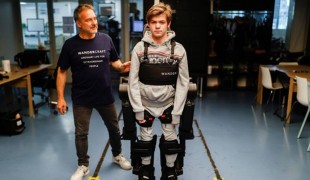
Father creates exoskeleton to help son with genetic neurological condition walk
BODY BALANCE: Maintaining body balance
STANDING UP: Standing up from a seated position
WALKING WITH A WALKING AID: Walking with a walking aid
CAREGIVING
Cervical spinal cord injury/Tetraplegia
Assistive Technology access
Walking Aid (wheelchair/walker/crutches)
Restoring mobility
Managing pain
Promoting self-management
Preserving Organ Function
Managing Neurological Disorders
Recovering from Traumatic Injuries
Maintaining Balance and Mobility
Restoring Blood Circulation
To improve Treatment/Therapy
Preventing (Vaccination, Protection, Falls, Research/Mapping)
Raise awareness
Caregiving Support
General and Family Medicine
Intensive Care Medicine
Neurology
Physical Medicine and Rehabilitation
Sports Medicine
France
-
-
-
735
-
0
-
9141

Scooter for disabled people
MOVING IN A WHEELCHAIR: Moving using a wheelchair.
CAREGIVING
Amyotrophic Lateral Sclerosis
Assistive Daily Life Device (to help ADL)
Walking Aid (wheelchair/walker/crutches)
Gait abnormalities (e.g., walking difficulties, unsteady gait)
Muscle cramps or spasms
Difficulty coordinating movements
Stiffness or rigidity (difficulty moving)
Paralysis of the legs and lower body
Muscle weakness
Fatigue
Restoring mobility
Promoting self-management
Rehabilitating After Stroke
Managing Neurological Disorders
Promoting inclusivity and social integration
Preventing (Vaccination, Protection, Falls, Research/Mapping)
Caregiving Support
Neurology
Orthopedics
Rheumatology
United States
-
-
-
556
-
0
-
5411

Teacher Alex Truesdell is Transforming Lives: Adaptive Design Association Revolutionizes Disability Solutions
CAREGIVING
Drawing
Painting
Playing
BODY BALANCE: Maintaining body balance
(SELF)-CARE: DRINKING: Drinking independently.
(SELF)-CARE: EATING: Eating independently.
MOVING IN A WHEELCHAIR: Moving using a wheelchair.
Playing an instrument
Studying
Blindness
Hand Deformity
Neuromuscular Disorders
Assistive Daily Life Device (to help ADL)
Walking Aid (wheelchair/walker/crutches)
Restoring mobility
Replacing lost limbs
Enhancing health literacy
Promoting self-management
Promoting inclusivity and social integration
To improve Treatment/Therapy
Preventing (Vaccination, Protection, Falls, Research/Mapping)
Raise awareness
Caregiving Support
General and Family Medicine
Internal Medicine
Orthopedics
Pediatrics
Physical Medicine and Rehabilitation
United States
-
 en
en
Danielperez123 • Tue, 08/06/2019 - 13:35
Google