

- 5219
- 507
- 15
- 25
- 0
- Help Ukraine
About the solution
Stacy Zoern suffers from spinal muscular atrophy and has always needed a wheelchair to dislocate herself. This motivated her to create a solution to help others in the same situation and to become more independent.
So, she came up with Kenguru cars, designed in a way that allows easy access for wheelchair users. The car that provides easy access and drivability, without ever getting out of the wheelchair.
The car is environmentally friendly and, reaching a maximum speed of around 56 Km/h, is ideal for short-distance drives around the neighbourhood and city streets.
It has only room for one person (the driver) and, instead of a steering wheel, it has a motorbike-style handlebar. The entrance to the vehicle is very simple: pushing a remote button makes the back of the car lift up and the automatic ramp lower down, so that the driver can go in. Still seated on his or her wheelchair, the driver can then start driving.
Stacy founded her own company around this gadget and Kenguru has secured millions of dollars from investors. The company projects the cars will be sold in the UK for about $25,000.
Adapted from: http://bit.ly/2m5FYZT
More info: http://www.kengurucars.co.uk
https://www.youtube.com/watch?v=oyh--l2pf98
This solution shall not include mention to the use of drugs, chemicals or biologicals (including food); invasive devices; offensive, commercial or inherently dangerous content. This solution was not medically validated. Proceed with caution! If you have any doubts, please consult with a health professional.
DISCLAIMER: This story was written by someone who is not the author of the solution, therefore please be advised that, although it was written with the utmost respect for the innovation and the innovator, there can be some incorrect statements. If you find any errors please contact the patient Innovation team via info@patient-innovation.com
-
-
428
-
0
-
3781
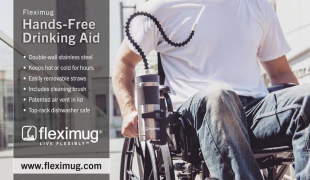
David Cardell creates Fleximug to help his mother with Multiple sclerosis (MS)
(SELF)-CARE: DRINKING: Drinking independently.
SWALLOWING: Swalling food and liquids
CAREGIVING
Multiple Sclerosis
Assistive Daily Life Device (to help ADL)
Restoring mobility
Replacing lost limbs
Enhancing health literacy
Promoting self-management
Enhancing digestive function
Promoting inclusivity and social integration
General and Family Medicine
Internal Medicine
Medical Genetics
Neurology
Rheumatology
United States
-
-
-
1064
-
0
-
20672

Proloquo2Go – App to help people communicate
CAREGIVING
COMMUNICATION: Communicating, whether by speaking, listening, or other means
Social interaction
Paralysis
Autism
Cerebral Palsy
Brain Stroke
Brain Injury (Abscess, Brain Barrier Defect, Brain Contusion, Brain Hemorrhage, Brain Edema)
Assistive Daily Life Device (to help ADL)
Assistive Technology access
App (Including when connected with wearable)
Tremors
Muscle cramps or spasms
Difficulty coordinating movements
Muscle weakness
Difficulty speaking or understanding speech
Trouble with fine motor skills (e.g., writing, buttoning clothes)
Twitching or involuntary movements (myoclonus)
Acquired language impairment (Aphasia)
Promoting self-management
Managing Neurological Disorders
Building Supportive Community Relationships
Promoting inclusivity and social integration
Improving Speech and Communication
Caregiving Support
Clinical Pathology
Medical Genetics
Neurology
Pediatrics
Rheumatology
Netherlands
-
-
-
516
-
2
-
5250

Students make 3D printed hand and arm for a little girl
Grip
CAREGIVING
Muscle Tone Abnormalities
Muscular Dystrophy
3d Printed
Assistive Daily Life Device (to help ADL)
Prosthesis
Muscle cramps or spasms
Stiffness or rigidity (difficulty moving)
Muscle weakness
Promoting self-management
Preserving Organ Function
Promoting inclusivity and social integration
Raise awareness
Medical Genetics
Neurology
Orthopedics
Rheumatology
United States
-
 en
en