

- 9835
- 569
- 15
- 14
- 0
- Help Ukraine
About the solution
“I was able to overcome autism because I had good teachers”, Temple said.
She wrote these notes on how to teach autistic people:
“1) Many people with autism are visual thinkers.
2) Avoid long strings of verbal instructions.
3) Many children with autism are good at drawing, art and computer programming. These talent areas should be encouraged.
4) Many autistic children get fixated on one subject such as trains and maps. The best way to deal with fixations is to use them to motivate school work.
5) Use concrete visual methods to teach number concepts.
7) Some autistic children will learn reading more easily with phonics, and others will learn best by memorizing whole words.
8) When I was a child, loud sounds like the school bell hurt my ears like a dentist drill hitting a nerve. Children with autism need to be protected from sounds that hurt their ears.
10) Some hyperactive autistic children who fidget all the time will often be calmer if they are given a padded weighted vest to wear.
11) Some individuals with autisms will respond better and have improved eye contact and speech if the teacher interacts with them while they are swinging on a swing or rolled up in a mat.
12) Some children and adults can sing better than they can speak.
13) Some nonverbal children and adults cannot process visual and auditory input at the same time.
14) In older nonverbal children and adults touch is often their most reliable sense. It is often easy for them to feel.
15) Some children and adults with autism will learn more easily if the computer keyboard is placed close to the screen.
16) Nonverbal children and adults will find it easier to associate words with pictures if they see the printed word and a picture on a flashcard”.
Temple also wrote many books on how to deal with Autism and Asperger’s.
More info: http://www.templegrandin.com/
Adapted from: http://bit.ly/2hdi7PY
What about you, do you have any solutions? Please share them with the Patient Innovation community!
这些解决方案不应包括使用药物,化学品或生物制品(包括食品);创伤性设备;冒犯性的,商业或内在危险的内容。该解决方案未经医学验证。请谨慎进行!如果您有任何疑问,请咨询健康专家。
DISCLAIMER: This story was written by someone who is not the author of the solution, therefore please be advised that, although it was written with the utmost respect for the innovation and the innovator, there can be some incorrect statements. If you find any errors please contact the patient Innovation team via info@patient-innovation.com
-
-
1311
-
0
-
24710

跟踪自闭症儿童的系统
CAREGIVING
COMMUNICATION: Communicating, whether by speaking, listening, or other means
Social interaction
Autism
Assistive Daily Life Device (to help ADL)
Body-Worn solutions (Clothing, accessories, shoes, sensors...)
App (Including when connected with wearable)
Anxiety
Difficulty concentrating or making decisions
Social withdrawal or isolation
Restlessness or feeling slowed down
Loss of interest or pleasure in activities (anhedonia)
Promoting self-management
Managing Neurological Disorders
Preventing (Vaccination, Protection, Falls, Research/Mapping)
Caregiving Support
Child and Adolescent Psychiatry
Medical Genetics
Neurology
Pediatrics
Psychiatry
Israel
-
-
-
922
-
0
-
23787
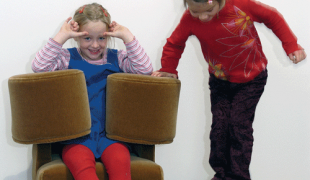
The squeeze chair project
-
-
-
1065
-
0
-
20678

Proloquo2Go – App to help people communicate
CAREGIVING
COMMUNICATION: Communicating, whether by speaking, listening, or other means
Social interaction
Paralysis
Autism
Cerebral Palsy
Brain Stroke
Brain Injury (Abscess, Brain Barrier Defect, Brain Contusion, Brain Hemorrhage, Brain Edema)
Assistive Daily Life Device (to help ADL)
Assistive Technology access
App (Including when connected with wearable)
Tremors
Muscle cramps or spasms
Difficulty coordinating movements
Muscle weakness
Difficulty speaking or understanding speech
Trouble with fine motor skills (e.g., writing, buttoning clothes)
Twitching or involuntary movements (myoclonus)
Acquired language impairment (Aphasia)
Promoting self-management
Managing Neurological Disorders
Building Supportive Community Relationships
Promoting inclusivity and social integration
Improving Speech and Communication
Caregiving Support
Clinical Pathology
Medical Genetics
Neurology
Pediatrics
Rheumatology
Netherlands
-
 zh
zh