

- 8522
- 681
- 15
- 14
- 0
- Help Ukraine
About the solution
Almost one in 10 people worldwide suffer from lower back pain and it has now been established that lower back pain accounts for a third of all work-related disabilities.
Vikram started suffering from lower back pain in 2015 and after a forced four months brake from work he decided to do something.
“My body just gave up. I began experiencing severe upper back pain because my muscles had swollen up. I couldn’t type on the keyboard because I felt pain in my shoulders. It was unbearable,” said Vikram.
Vikram created Spiqi, a compact device made of a combination of plastic and rubber that can be fixed to the back of the neck, between the shoulders, using a sticker. It has an advanced sensor that vibrates every time the wearer slouches, reminding him to straighten up. It also monitors the person’s back activity in real time, setting time-based posture goals and advising him/her to take regular breaks.
Spiqi uses AI to calibrate to the person’s back movements automatically and helps wearers to develop a habit of changing posture within a specified timeframe. It has to be charged electronically and runs for up to two-and-a-half days under normal temperature conditions. A mobile app to complement the device has also been developed, and it can be connected to it to track posture goals.
Spiqi won the the second prize at Huddle Kerala, a startup conclave organised by the state government along with the Internet and Mobile Association of India (IMAI).
"One of the challenges I faced making Spiqi was the support for low volume prototype manufacturing. Finding mentorship to take this to a new level was another challenge", Vikram said.
Adapted from: https://www.thebetterindia.com/137737/jai-vikram-singh-verma-jaipur-spiqi-
More info: https://spiqi.com/
这些解决方案不应包括使用药物,化学品或生物制品(包括食品);创伤性设备;冒犯性的,商业或内在危险的内容。该解决方案未经医学验证。请谨慎进行!如果您有任何疑问,请咨询健康专家。
DISCLAIMER: This story was written by someone who is not the author of the solution, therefore please be advised that, although it was written with the utmost respect for the innovation and the innovator, there can be some incorrect statements. If you find any errors please contact the patient Innovation team via info@patient-innovation.com
-
-
636
-
0
-
6492

Collaborator Pierluigi Mantovani creates Evolution Devices - solutions that aim to transform Multiple Sclerosis Management
CAREGIVING
BODY BALANCE: Maintaining body balance
STANDING UP: Standing up from a seated position
WALKING: Walking
Multiple Sclerosis
Assistive Daily Life Device (to help ADL)
Walking Aid (wheelchair/walker/crutches)
App (Including when connected with wearable)
AI algorithm
Body-Worn solutions (Clothing, accessories, shoes, sensors...)
Restoring mobility
Regaining sensory function
Managing pain
Promoting self-management
Preserving Organ Function
Managing Neurological Disorders
Maintaining Balance and Mobility
To improve Treatment/Therapy
Preventing (Vaccination, Protection, Falls, Research/Mapping)
Raise awareness
Caregiving Support
General and Family Medicine
Internal Medicine
Medical Genetics
Neurology
Physical Medicine and Rehabilitation
United States
-
-
-
672
-
0
-
7971
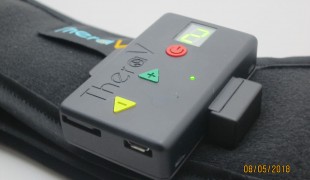
Engineer creates wearable to help cope with phantom limb pain
CAREGIVING
Limb Amputation
Mobility impairments
Limb Deformity
Body-Worn solutions (Clothing, accessories, shoes, sensors...)
Difficulty walking or moving
Muscle weakness
Limited range of motion
Muscle pain or stiffness
Loss of muscle coordination
Muscle cramps or spasms
Managing pain
To improve Treatment/Therapy
Neurology
Orthopedics
United States
-
-
-
703
-
0
-
8698
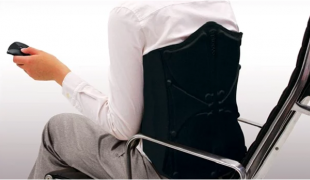
Daughter creates clothing product to relieve back pain
(SELF)-CARE: DRESSING: Dressing independently.
CAREGIVING
Chronic Back Pain
Spinal Cord and Nerve Root Disorders
Body-Worn solutions (Clothing, accessories, shoes, sensors...)
Muscle cramps or spasms
Stiffness or rigidity (difficulty moving)
Managing pain
Managing Neurological Disorders
Neurology
Orthopedics
Rheumatology
Australia
-
 zh
zh