

- 7654
- 595
- 19
- 24
- 2
- Help Ukraine
About the solution
Gracie Benedith-Cane’s son, Wani, was less than one year old, when he was diagnosed with septo-optic nerve dysplasia, a rare congenital malformation that can feature underdevelopment of the optic nerve, pituitary gland dysfunction, and absence of the septum pellucidum (a midline part of the brain).
“I realised something was going on with his eyes when he was two months,” she said, “I took him to the doctor, and he told me that he wasn’t going to have 100 percent of his vision.
Due to the disease, Wani is significantly visually impaired, being able to see only a little out of the corners of his eyes.
As Wani grew up and started dressing himself in the morning, Gracie noticed that he still needed to ask for help.
That is when she invented braille patches for her son’s clothing. The patches are adhered to the outside side of clothes, and include cues about direction.
“The patches, they're adhesive and you could stick them to clothes. And it has directional cues such as back, left, and right,” said Wani. “if the Braille's on the inside that means it's inside-out and if it's on the outside, then it means it's fine.”
The braille patches helped Wani dress more efficiently and independently.
Now Wani is 12-years-old, and is a confident, warm-hearted and smart boy.
Gracie has now become an entrepreneur, by starting the company Braille Code Inc, and sells the patches so that others can also benefit from her innovation.
Adapted from: https://on.today.com/2NxrEoC
More info: https://braillecodebrands.com
这些解决方案不应包括使用药物,化学品或生物制品(包括食品);创伤性设备;冒犯性的,商业或内在危险的内容。该解决方案未经医学验证。请谨慎进行!如果您有任何疑问,请咨询健康专家。
DISCLAIMER: This story was written by someone who is not the author of the solution, therefore please be advised that, although it was written with the utmost respect for the innovation and the innovator, there can be some incorrect statements. If you find any errors please contact the patient Innovation team via info@patient-innovation.com
-
-
654
-
7
-
9015
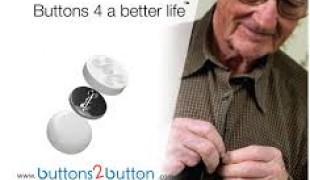
Woman creates magnetic buttons to help stepfather who has Parkinson's disease get dressed
(SELF)-CARE: DRESSING: Dressing independently.
Grip
CAREGIVING
Parkinson's Disease
Multiple Sclerosis
Bone Disorders (Decalcification, Bone Deformity, Bone Fracture, Bone Infection)
diabetes type 2
Assistive Daily Life Device (to help ADL)
Body-Worn solutions (Clothing, accessories, shoes, sensors...)
Muscle weakness
Tremors
Difficulty coordinating movements
Stiffness or rigidity (difficulty moving)
Limited range of motion
Muscle pain or stiffness
Loss of balance
Reduced grip force (grip)
Trouble with fine motor skills (e.g., writing, buttoning clothes)
Loss of muscle coordination
Muscle cramps or spasms
Joint deformity
Muscle twitching
Numbness or tingling in the extremities
Joint pain or swelling
Promoting self-management
Managing Neurological Disorders
Promoting inclusivity and social integration
Caregiving Support
Endocrinology
Neurology
Orthopedics
Rheumatology
United States
-
-
-
431
-
0
-
4359

Runway of Dreams - a clothing line created by a mom for children that are differently-abled
(SELF)-CARE: DRESSING: Dressing independently.
Neuromuscular Disorders
Body-Worn solutions (Clothing, accessories, shoes, sensors...)
Muscle weakness
Trouble with fine motor skills (e.g., writing, buttoning clothes)
Promoting self-management
Managing Neurological Disorders
Caregiving Support
Pediatrics
Physical Medicine and Rehabilitation
United States
-
-
-
615
-
0
-
7690

Open back adaptive slacks (from slacks without elastic waist bands)
(SELF)-CARE: DRESSING: Dressing independently.
(SELF)-CARE: USING THE TOILET: Using the toilet independently
Amyotrophic Lateral Sclerosis
Body-Worn solutions (Clothing, accessories, shoes, sensors...)
Gait abnormalities (e.g., walking difficulties, unsteady gait)
Tremors
Muscle cramps or spasms
Difficulty coordinating movements
Stiffness or rigidity (difficulty moving)
Paralysis of the legs and lower body
Muscle weakness
Loss of balance
Trouble with fine motor skills (e.g., writing, buttoning clothes)
Numbness or tingling in the extremities
Twitching or involuntary movements (myoclonus)
Dizziness or lightheadedness
Fatigue
Restoring mobility
Promoting self-management
Rehabilitating After Stroke
Managing Neurological Disorders
Caregiving Support
General and Family Medicine
Internal Medicine
Neurology
Orthopedics
Pediatrics
Rheumatology
United States
-
 zh
zh
Lisa6 • Sat, 11/09/2019 - 03:40