

- 5290
- 483
- 14
- 18
- 0
- Help Ukraine
About the solution
The MiAssiSt is a DIY, wheelchair-mountable assistive device to support users with reduced upper limb muscle strength in various ADLs such as eating, drinking or using computers. It consists of a passive counterweight and an active add-on. The adjustable counterweight passively compensates for the weight of the lower arm and enables the user to use his own remaining muscle strength as often as possible. If needed, the active add-on provides additional support for lifting heavier objects such as a full glass of water. The add-on is controlled by the index finger of the unsupported arm.
However, to make the MiAssiSt accessible for everyone with similar needs, all the necessary documents to rebuild the MiAssiSt, including user and construction manuals, program codes, CAD models and component lists, are openly available to download here: https://relab.ethz.ch/downloads/open-hardware/MiAssiSt.html
这些解决方案不应包括使用药物,化学品或生物制品(包括食品);创伤性设备;冒犯性的,商业或内在危险的内容。该解决方案未经医学验证。请谨慎进行!如果您有任何疑问,请咨询健康专家。
-
-
880
-
1
-
12686

Parents create 3D printed orthosis inspired by their son
CAREGIVING
MOVING IN A WHEELCHAIR: Moving using a wheelchair.
(SELF)-CARE: EATING: Eating independently.
(SELF)-CARE: DRINKING: Drinking independently.
Cerebral Palsy
Angelman's Syndrome
Neuromuscular Disorders
Muscle Tone Abnormalities weakness
3d Printed
Assistive Daily Life Device (to help ADL)
Body-Worn solutions (Clothing, accessories, shoes, sensors...)
Prosthesis
Gait abnormalities (e.g., walking difficulties, unsteady gait)
Muscle cramps or spasms
Difficulty coordinating movements
Stiffness or rigidity (difficulty moving)
Paralysis of the legs and lower body
Muscle weakness
Loss of balance
Managing Neurological Disorders
Maintaining Balance and Mobility
Caregiving Support
Neurology
Pediatrics
United Kingdom
-
-
-
871
-
0
-
12237
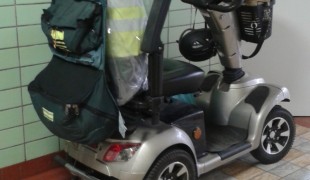
Patient adapts bag for scooters
MOVING IN A WHEELCHAIR: Moving using a wheelchair.
Ehlers-Danlos Syndrome
Intervertebral Disc Disorder
Spinal Cord and Nerve Root Disorders
Assistive Daily Life Device (to help ADL)
Difficulty walking or moving
Muscle weakness
Muscle cramps or spasms
Difficulty coordinating movements
Stiffness or rigidity (difficulty moving)
Limited range of motion
Muscle pain or stiffness
Joint deformity
Joint redness or warmth
Swelling or inflammation
Difficulty bearing weight
Fatigue
Joint pain or swelling
Promoting self-management
Managing Neurological Disorders
Medical Genetics
Neurology
Orthopedics
Belgium
-
-
-
843
-
0
-
11589
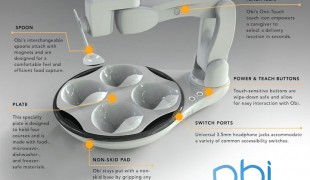
Man creates device to help grandfather feed himself
Grip
(SELF)-CARE: EATING: Eating independently.
Arthritis
Cerebral Palsy
Neuromuscular Disorders
Muscular Dystrophy
Assistive Daily Life Device (to help ADL)
Difficulty walking or moving
Muscle weakness
Muscle cramps or spasms
Difficulty coordinating movements
Stiffness or rigidity (difficulty moving)
Limited range of motion
Muscle pain or stiffness
Reduced grip force (grip)
Loss of muscle coordination
Joint deformity
Joint redness or warmth
Joint pain or swelling
Restoring mobility
Promoting self-management
Managing Neurological Disorders
Medical Genetics
Neurology
Orthopedics
Rheumatology
United States
-
 zh
zh