

- 10774
- 812
- 32
- 30
- 0
- Help Ukraine
About the solution
Family Veeh has always made a lot of music at home, either with violin, cello or harmonium. They quickly observed that their son Andreas, who was born with Down Syndrome, shared this passion for music. But due to his condition, it seemed impossible that Andreas would be able to make music on his own, at least with existing instruments. Hence, his father invented the Veeh-Harve, a stringed instrument suited to the Andreas’ abilities.
Inspired by old stringed instruments with templates for sheet music, Hermann invented a totally new instrument that can be played without knowledge of notes. He created an easy and clear notation especially suited to this instrument. The templates for the sheet music are positioned between the resonance body and the strings so that the notation is made tangible.
It took five years and numerous prototypes until Hermann launched the instrument in 1992. The Veeh-Harfe is made of valuable tone wood and the space between the strings is larger compared to other instruments.
“The Veeh-Harfe opens up a completely new world to Andreas and other people. The dream of making music with people with different skills and talents has become reality”, is stated on the official website.
The innovation enables children the first contact to music instruments, is used for music pedagogy as well as in clinics and enriches the everyday life in retirement homes.
Adapted from: http://www.veeh-harfe.de/
What about you? We are curious to read about your innovation on the website.
https://youtu.be/rRDDwKNpG4Q
This solution shall not include mention to the use of drugs, chemicals or biologicals (including food); invasive devices; offensive, commercial or inherently dangerous content. This solution was not medically validated. Proceed with caution! If you have any doubts, please consult with a health professional.
DISCLAIMER: This story was written by someone who is not the author of the solution, therefore please be advised that, although it was written with the utmost respect for the innovation and the innovator, there can be some incorrect statements. If you find any errors please contact the patient Innovation team via info@patient-innovation.com
-
-
694
-
0
-
9608
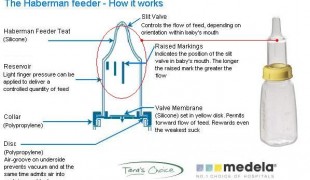
The Haberman Feeder- a mum's invention
VENTILATION
(SELF)-CARE: DRINKING: Drinking independently.
CAREGIVING
SWALLOWING: Swalling food and liquids
Down Syndrome (Trisomy 21)
Assistive Daily Life Device (to help ADL)
Promoting self-management
Enhancing digestive function
Support on Puerperium/Post-childbirth
Caregiving Support
Gastroenterology
General and Family Medicine
Medical Genetics
Pediatrics
Physical Medicine and Rehabilitation
United Kingdom
-
-
-
554
-
0
-
5394

Teacher Alex Truesdell is Transforming Lives: Adaptive Design Association Revolutionizes Disability Solutions
CAREGIVING
Drawing
Painting
Playing
BODY BALANCE: Maintaining body balance
(SELF)-CARE: DRINKING: Drinking independently.
(SELF)-CARE: EATING: Eating independently.
MOVING IN A WHEELCHAIR: Moving using a wheelchair.
Playing an instrument
Studying
Blindness
Hand Deformity
Neuromuscular Disorders
Assistive Daily Life Device (to help ADL)
Walking Aid (wheelchair/walker/crutches)
Restoring mobility
Replacing lost limbs
Enhancing health literacy
Promoting self-management
Promoting inclusivity and social integration
To improve Treatment/Therapy
Preventing (Vaccination, Protection, Falls, Research/Mapping)
Raise awareness
Caregiving Support
General and Family Medicine
Internal Medicine
Orthopedics
Pediatrics
Physical Medicine and Rehabilitation
United States
-
-
-
884
-
2
-
11999
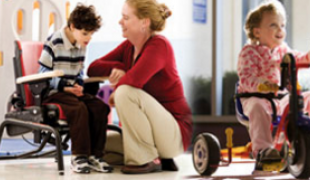
Father invents products for special needs children
CAREGIVING
Autism
Asperger's Syndrome
Cerebral Palsy
Brain Injury (Abscess, Brain Barrier Defect, Brain Contusion, Brain Hemorrhage, Brain Edema)
Assistive Daily Life Device (to help ADL)
Educational/Leisure device (book, toy, game...)
Anxiety
Gait abnormalities (e.g., walking difficulties, unsteady gait)
Difficulty concentrating or making decisions
Muscle cramps or spasms
Difficulty coordinating movements
Stiffness or rigidity (difficulty moving)
Paralysis of the legs and lower body
Muscle weakness
Difficulty speaking or understanding speech
Cognitive impairment
Difficulty controlling impulses
Enhancing Mental Health
Improving Speech and Communication
Caregiving Support
Child and Adolescent Psychiatry
General and Family Medicine
Neurology
Pediatrics
Psychiatry
United States
-
 en
en