

- 4089
- 436
- 17
- 10
- 0
- Help Ukraine
About the solution
Raleigh Dewan, a student at Southern Methodist University in Dallas, Texas, witnessed first-hand the severe effects a neurologic disorder can make as his grandmother June was diagnosed with Parkinson’s disease. Dewan saw the debilitating hand tremors that would not allow her to eat without spilling food everywhere, preventing her from enjoying the family dinners, she lovingly prepared.
So, Dewan began researching Parkinson’s disease and the available eating-assist devices. He found weighted spoons with heavy handles and some motorized versions already on the market. However, they all were prohibitively expensive and of limited efficacy. Then, fueled by the desire to help his own grandmother, Dewan envisioned an affordable, mechanical solution that would solve tremors, and his first ideation of SteadiSpoon came to fruition in an entrepreneurship class.
He later joined forces with another student from SMU, Mason Morland, and also Emily Javedan, a Johns Hopkins student, to better develop the idea. The SteadiSpoon is a self-stabilizing eating utensil that allows people suffering from disorders that cause shaking – such as Parkinson’s and essential tremors – to regain their ability to feed themselves with ease and dignity. The device designs are 3D-printable, allowing for scalable production and charitable licensing in developing countries.
Dewan’s grandmother sadly passed away in 2021, but her story and spirit continue to inspire the project on every level.
This story was adapted from: https://www.smu.edu/News/Research/SteadiSpoon
The images were taken from: https://www.smu.edu/News/Research/SteadiSpoon, and we do not own any of them.
This solution shall not include mention to the use of drugs, chemicals or biologicals (including food); invasive devices; offensive, commercial or inherently dangerous content. This solution was not medically validated. Proceed with caution! If you have any doubts, please consult with a health professional.
DISCLAIMER: This story was written by someone who is not the author of the solution, therefore please be advised that, although it was written with the utmost respect for the innovation and the innovator, there can be some incorrect statements. If you find any errors please contact the patient Innovation team via info@patient-innovation.com
-
-
503
-
2
-
5154

Students make 3D printed hand and arm for a little girl
Grip
CAREGIVING
Muscle Tone Abnormalities
Muscular Dystrophy
3d Printed
Assistive Daily Life Device (to help ADL)
Prosthesis
Muscle cramps or spasms
Stiffness or rigidity (difficulty moving)
Muscle weakness
Promoting self-management
Preserving Organ Function
Promoting inclusivity and social integration
Raise awareness
Medical Genetics
Neurology
Orthopedics
Rheumatology
United States
-
-
-
810
-
0
-
10878
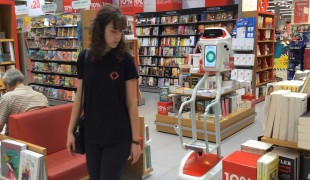
Wheelchair user invents robotic shopping cart
MOVING IN A WHEELCHAIR: Moving using a wheelchair.
Shopping
Cerebral Palsy
Neuromuscular Disorders
Paralysis
Spinal Cord and Nerve Root Disorders
Cervical spinal cord injury/Tetraplegia
3d Printed
Assistive Daily Life Device (to help ADL)
Assistive Technology access
Muscle cramps or spasms
Difficulty coordinating movements
Stiffness or rigidity (difficulty moving)
Paralysis of the legs and lower body
Muscle weakness
Promoting self-management
Managing Neurological Disorders
Promoting inclusivity and social integration
General and Family Medicine
Neurology
Orthopedics
Portugal
-
-
-
755
-
0
-
11199

Cane helps blind people recognize faces
COMMUNICATION: Communicating, whether by speaking, listening, or other means
WALKING WITH A WALKING AID: Walking with a walking aid
Urban exploration
Traveling
Social interaction
Blindness
Assistive Daily Life Device (to help ADL)
Walking Aid (wheelchair/walker/crutches)
Vision problems
Sensitivity to light or sound
Restoring mobility
Promoting self-management
Managing Neurological Disorders
Promoting inclusivity and social integration
Maintaining Balance and Mobility
Improving Speech and Communication
Preventing (Vaccination, Protection, Falls, Research/Mapping)
Neurology
Ophthalmology
United Kingdom
-
 en
en