

- 10063
- 611
- 20
- 18
- 0
- Help Ukraine
About the solution
Peter decided to create this device because he was starting to finding it hard to push his traditional wheelchair around on rough ground, and he wanted to be able to go with his father to beach and to the countryside.
This special wheelchair is made from many different components.
- Seat from an LDV van complete with seatbelt and armrests;
- 4.5 horsepower Honda engine with two forward gears (it’s capable of speeds of up to 8mph);
- All-terrain caterpillar tracks from a motorized wheelbarrow;
- Welded frame made from scrap and painted blue.
“The brakes work like a tank's brakes, they disengage the tracks causing it to stop. Someone has to operate the machine from the back”, the inventor explained.
The whole customized wheelchair cost about £500 to make after their local community clubbed together to donate materials.
With the help of three friends, Peter took about 30 hours to develop the chair.
“My dad was attacked by tanks during the Second World War - so I thought it would be fitting to create him this. He never got chance to ride them but managed to fight one off with anti-tank missiles. Now this is his chance to have his own little tank. I'd seen motorised wheelbarrows used on building sites and I thought that would make a much better wheelchair for my dad. He absolutely loves his new chair. Since he's had it we've been to the beach a few times and had a great time. He can go anywhere on it now”, Eddie observed.
Adapted from: http://dailym.ai/1N1PylB
What about you, do you have any solutions? Please share them with the Patient Innovation community!
https://www.youtube.com/watch?v=BcXTHnKgX_Y
This solution shall not include mention to the use of drugs, chemicals or biologicals (including food); invasive devices; offensive, commercial or inherently dangerous content. This solution was not medically validated. Proceed with caution! If you have any doubts, please consult with a health professional.
DISCLAIMER: This story was written by someone who is not the author of the solution, therefore please be advised that, although it was written with the utmost respect for the innovation and the innovator, there can be some incorrect statements. If you find any errors please contact the patient Innovation team via info@patient-innovation.com
-
-
543
-
0
-
5804
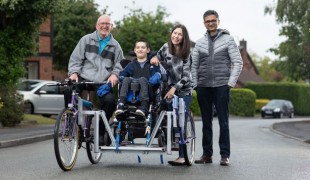
Man builds special bicycle for boy in a wheelchair
MOVING IN A WHEELCHAIR: Moving using a wheelchair.
CAREGIVING
Hereditary Muscle Disorders
Neuromuscular Disorders
Walking Aid (wheelchair/walker/crutches)
Difficulty walking or moving
Muscle weakness
Muscle cramps or spasms
Difficulty coordinating movements
Stiffness or rigidity (difficulty moving)
Paralysis of the legs and lower body
Limited range of motion
Muscle pain or stiffness
Loss of balance
Reduced grip force (grip)
Cognitive impairment
Joint deformity
Difficulty getting up from the floor
Maintaining Balance and Mobility
Preventing (Vaccination, Protection, Falls, Research/Mapping)
Caregiving Support
Medical Genetics
Neurology
Orthopedics
Pediatrics
United Kingdom
-
-
-
541
-
0
-
5556
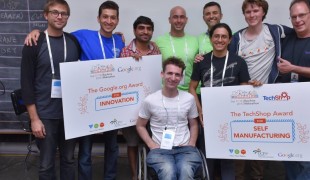
Smart Ass – App and 3D device for wheelchair users
MOVING IN A WHEELCHAIR: Moving using a wheelchair.
CAREGIVING
Neuromuscular Disorders
Assistive Daily Life Device (to help ADL)
Walking Aid (wheelchair/walker/crutches)
3d Printed
Muscle cramps or spasms
Paralysis of the legs and lower body
Regaining sensory function
Managing pain
Promoting self-management
Preserving Organ Function
To implement a diagnostic tool
Maintaining Balance and Mobility
Restoring Blood Circulation
Preventing (Vaccination, Protection, Falls, Research/Mapping)
Caregiving Support
Dermatology
Internal Medicine
Orthopedics
United States
-
-
-
683
-
0
-
10258

Patient develops sand rider wheelchair
MOVING IN A WHEELCHAIR: Moving using a wheelchair.
CAREGIVING
Walking Aid (wheelchair/walker/crutches)
Restoring mobility
Promoting self-management
Promoting inclusivity and social integration
To implement a diagnostic tool
Maintaining Balance and Mobility
Caregiving Support
General and Family Medicine
Medical Genetics
Neurology
Orthopedics
Rheumatology
Aging
Mobility issues
Solutions for Disabled people
United States
-
 en
en