

- 4101
- 374
- 11
- 12
- 0
- Help Ukraine
About the solution
The simple inexpensive way to close the door for a person who is in a wheelchair. Tie the string around the middle hinge of the door and the other end around the door handle. Leave enough drape in the strength so it's easy to grasp. After you go through the door reach back and grab the string and pull the door closed.
This solution shall not include mention to the use of drugs, chemicals or biologicals (including food); invasive devices; offensive, commercial or inherently dangerous content. This solution was not medically validated. Proceed with caution! If you have any doubts, please consult with a health professional.
-
-
439
-
0
-
4281

How to keep warm in wheelchairs
MOVING IN A WHEELCHAIR: Moving using a wheelchair.
Cerebral Palsy
Muscular Dystrophy
Neuromuscular Disorders
Cervical spinal cord injury/Tetraplegia
Walking Aid (wheelchair/walker/crutches)
Strategy/Tip
Gait abnormalities (e.g., walking difficulties, unsteady gait)
Muscle cramps or spasms
Difficulty coordinating movements
Stiffness or rigidity (difficulty moving)
Paralysis of the legs and lower body
Muscle weakness
Cognitive impairment
Numbness or tingling in the extremities
Promoting self-management
Preventing (Vaccination, Protection, Falls, Research/Mapping)
General and Family Medicine
Medical Genetics
Neurology
Orthopedics
Rheumatology
United Kingdom
-
-
-
683
-
0
-
10262

Patient develops sand rider wheelchair
MOVING IN A WHEELCHAIR: Moving using a wheelchair.
CAREGIVING
Walking Aid (wheelchair/walker/crutches)
Restoring mobility
Promoting self-management
Promoting inclusivity and social integration
To implement a diagnostic tool
Maintaining Balance and Mobility
Caregiving Support
General and Family Medicine
Medical Genetics
Neurology
Orthopedics
Rheumatology
Aging
Mobility issues
Solutions for Disabled people
United States
-
-
-
391
-
0
-
4900
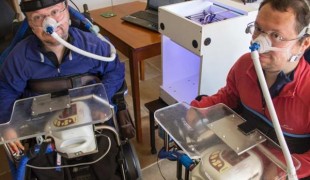
3D printing to cope with muscular dystrophy
MOVING IN A WHEELCHAIR: Moving using a wheelchair.
CAREGIVING
Duchenne Muscular Dystrophy
3d Printed
Assistive Daily Life Device (to help ADL)
Difficulty walking or moving
Muscle weakness
Limited range of motion
Muscle pain or stiffness
Loss of muscle coordination
Muscle cramps or spasms
Promoting self-management
Caregiving Support
Medical Genetics
Neurology
Orthopedics
Australia
-
 en
en